Knowledge Hub
Browse All Topics
In-depth articles across regulations, standards, life cycle assessment, and the energy transition.
13 articles found
Technical · advanced
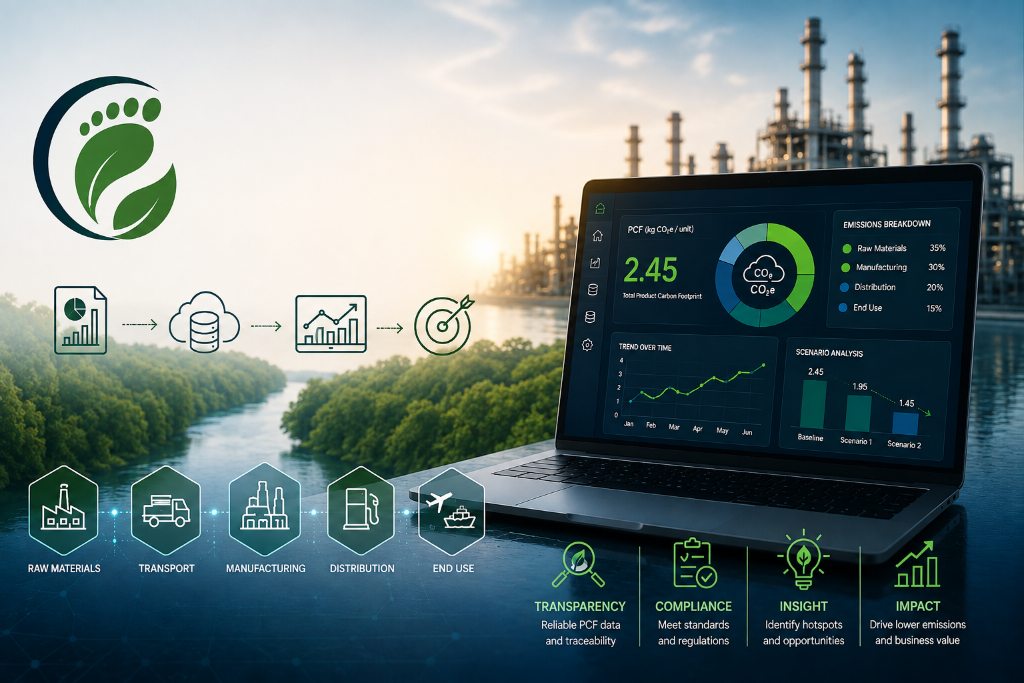
Product Carbon Footprint IT Platforms: From Sustainability Reporting to Business Decision-Making
Product Carbon Footprint (PCF) management is evolving from spreadsheet-based sustainability reporting into a core enterprise business process. This article explores why dedicated PCF platforms are becoming essential for refining, petrochemical, and chemical companies, what capabilities such platforms should deliver, a three-level architecture concept, integration with existing digital systems, and a phased implementation approach.

Challenges · advanced
The Water-Energy-Climate Nexus: Managing Interconnected Sustainability Risks in a Warming World
Water security, energy systems, and climate change are fundamentally interconnected. In 2026, prolonged droughts threaten hydropower baseloads while water scarcity threatens to bottleneck green technologies like clean hydrogen. This strategic framework examines the nexus, regional vulnerabilities, and actionable mitigation strategies.

Energy · intermediate
Lower Carbon Aviation Fuel (LCAF): A Practical Bridge to Aviation Decarbonization Amid SAF Scalability Challenges
While Sustainable Aviation Fuel (SAF) is aviation's long-term decarbonization solution, its near-term scalability constraints demand a pragmatic bridge. This article explores how Lower Carbon Aviation Fuel (LCAF) — derived from conventional petroleum but produced with significantly reduced upstream carbon intensity — can deliver immediate, high-volume emissions reductions while next-generation fuel technologies mature.
Energy · intermediate
Balancing Decarbonization and Energy Security: The Central Dilemma of the Global Energy Transition
The global energy transition has entered a complex phase where rapid decarbonization collides with energy security and economic stability. This article explores the Energy Trilemma, the rise of AI-driven electricity demand, the resurgence of natural gas and nuclear power, and what adaptive strategies leaders need to navigate the next three decades.

LCA · beginner
Demystifying the Chemical Sector's Carbon Footprint: A Novice's Guide to the TfS PCF Guideline (Version 3.0)
The TfS PCF Guideline (v3.0) provides a harmonized, ISO 14067-compliant standard for calculating and sharing Product Carbon Footprints across the chemical industry. This guide breaks down the key rules on system boundaries, data inclusion thresholds, allocation, and the critical limits on comparative claims.

Challenges · advanced
The Horizon of High-Altitude Decarbonization: Analyzing the Scalability Challenges and Risks of Sustainable Aviation Fuel
With aviation committed to net-zero by 2050, SAF must scale from under 0.3% of jet fuel supply to majority market share. This analysis examines the structural bottlenecks—from the project realization gap and green premium economics to feedstock competition and infrastructure drag—that stand between political ambition and industrial reality.
Regulations · intermediate
ICAO CORSIA: Decarbonizing Global Aviation
CORSIA (Carbon Offsetting and Reduction Scheme for International Aviation) is the first global market-based measure for an entire industrial sector, developed by ICAO to address CO₂ emissions from international flights and support net-zero aviation by 2050.

Standards · advanced
ISO 14071: Critical Review of Life Cycle Assessment Studies
ISO 14071:2024 provides requirements and guidance for the critical review of LCA studies, defining how a review should be conducted and what qualifications reviewers must possess — acting as the quality control manual for environmental assessments.
Standards · intermediate
ISO 14064: GHG Quantification, Reporting & Verification
ISO 14064 is the international benchmark for the quantification, reporting, and verification of Greenhouse Gas (GHG) emissions — transforming environmental claims into auditable, financial-grade data.
Standards · advanced
ISO 14044: Requirements and Guidelines for Life Cycle Assessment
ISO 14044 specifies the technical requirements and guidelines for conducting a Life Cycle Assessment (LCA). While ISO 14040 provides the framework, ISO 14044 is the detailed instruction manual dictating the specific methodologies practitioners must follow.

Regulations · intermediate
CSDDD / CS3D: The EU Corporate Sustainability Due Diligence Directive Explained
The Corporate Sustainability Due Diligence Directive (CSDDD), also known as CS3D, is a landmark EU regulation that mandates large companies to identify and address human rights and environmental risks across their global operations and chains of activities.

Technical · beginner
Scope 1, 2, and 3 Emissions: The Complete GHG Protocol Guide
Understanding the GHG Protocol's three scopes of greenhouse gas emissions — from direct operations to full value chain accounting.

Regulations · intermediate
Navigating the Corporate Sustainability Reporting Directive (CSRD): A Definitive Guide
The EU's CSRD transforms sustainability reporting from a voluntary exercise into a legally binding obligation. Following the Omnibus I simplification package, the directive now targets roughly 5,000 of the largest corporations. This guide covers scope, timelines, ESRS standards, double materiality, and the six-step compliance process.